Buildings Are a Third of Global Emissions. Here's What That's Actually Made Of.
Analysis · THE BUILT ENVIRONMENT'S CARBON PROBLEM · PART 1 OF 6
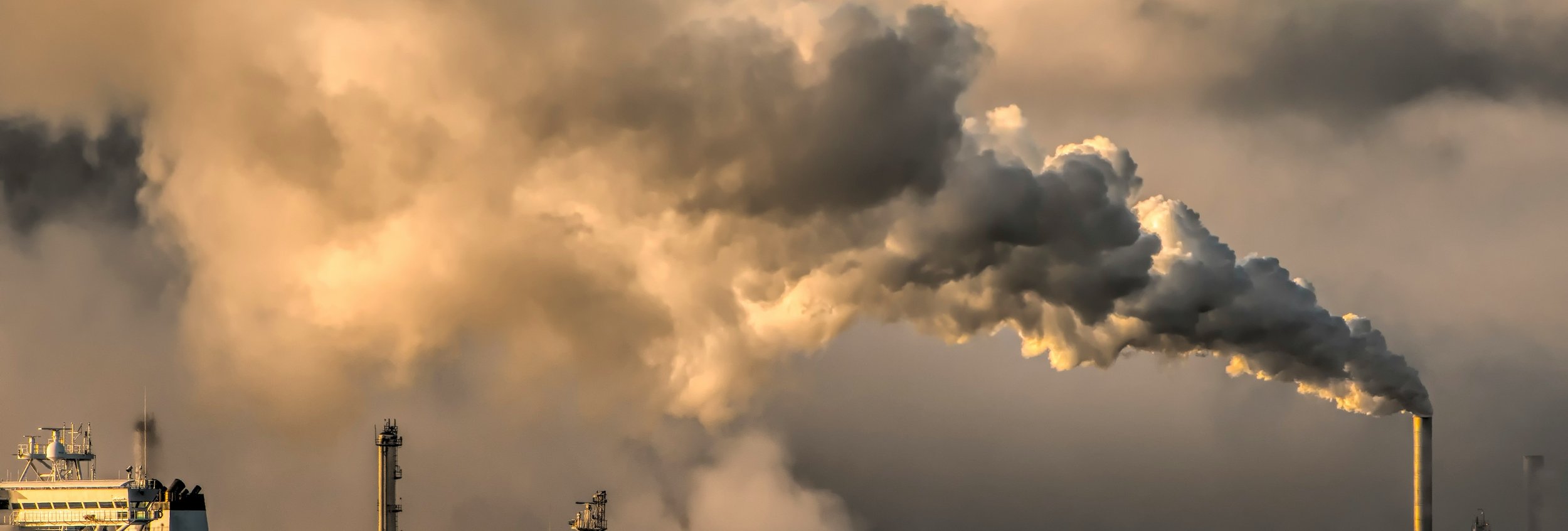
Photo by Chris LeBoutillier on Unsplash
Buildings and construction account for about a third of global emissions — roughly a third of global greenhouse-gas emissions, and about 37% of energy-related CO₂, by the UN Environment Programme's most recent figures. That total is well established. The more useful question is what makes it up, because the third is not a single problem, and the part of it that's growing fastest is also the part getting the least attention.
Two kinds of carbon
A building's emissions come in two forms. Operational carbon is everything it takes to run the place once people are in it: heating, cooling, lighting, hot water, plug loads. Embodied carbon is what was spent to build it: extracting and manufacturing the materials, moving them to site, and the construction work itself. Across a typical building's life, operational carbon has historically been the larger share at roughly 70–75%, with embodied making up the other 25–30%.
Operational carbon is also where the industry has put nearly all its effort, through better insulation, efficient equipment and tighter codes. It has helped, but slowly. Global building energy intensity has improved only about 8.5%, renewables still supplied just 17.3% of the sector's energy demand in 2024, and operational emissions actually rose around 1% that year, to 9.9 gigatonnes.
The more important change is in the mix. As buildings get more efficient and grids get cleaner, the operational share shrinks while embodied carbon grows. UNEP and others expect embodied to climb from roughly a quarter of the sector's emissions today to close to half by 2050. Materials are the reason: concrete, steel and aluminum alone account for about 23% of global emissions, most of it tied to the built environment.
Embodied carbon has one feature that makes it harder to deal with: there's no going back to fix it. A poorly insulated building can be retrofitted and an old boiler swapped for a heat pump, but the emissions from concrete already poured are spent. That makes the material choices locked in before construction some of the most permanent in the process, and the ones owners have typically thought about least.
The leading edge is already here
How the split lands in any given place depends on how clean the local grid is, and that varies widely around the world. Where electricity is still coal-heavy, operational carbon dominates. Where it's already clean, embodied carbon is most of what's left. A handful of economies with clean grids — Sweden, Norway, France, and British Columbia among them — are already close to a 50/50 split between operational and embodied carbon, which is roughly where the rest of the world is expected to be by 2050.
Those places are ahead because their power is already clean, and as other grids catch up, the same thing plays out everywhere- with operational emissions falling and embodied carbon left as the bigger share
The overlooked half
This is where the single headline number stops being useful. Once you look inside the third, the growing half — embodied carbon — turns out to be the part with almost none of the infrastructure built around it. Operational carbon has energy codes, efficiency standards, retrofit incentives, and decades of engineering attention. Embodied carbon has comparatively little: fewer rules, fewer financing tools, and far less scrutiny, even as its share climbs toward half the total.
A third of global emissions, with its fastest-growing half largely unmanaged and unfunded, is the problem worth working on. The rest of this series takes it apart: what that half is made of and why the materials are so hard to decarbonize, why the problem stays stuck when the fixes already exist, what it costs owners and what it puts at risk, and what actually reduces it.
Sources